
10 Best B2B Lead Generation Strategies to Drive Qualified Leads
August 18, 2025 • min to read
.jpeg)

B2B lead generation strategies sound easy enough: find buyers who have a problem that your service or product solves and close the deal.
But with buyers' behaviors constantly changing and competition catching up, outdated tactics won’t cut it. To move qualified leads through your sales pipeline, you need lead generation tactics that actually move the needle.
In this article, we’ll break down 10 proven B2B lead generation strategies, from creating gated content to automated lead routing. Also, we’ll share the 5 most common B2B lead generation mistakes to avoid.
What Are B2B Leads and Their Types?
B2B leads are potential buyers that represent businesses, not individuals. These are people who showed interest in your service or product and have the authority to make a purchase on behalf of their company.
Depending on how ready they are to buy, there are 2 B2B lead categories:
1. Market Qualified Leads (or MQLs) are potential buyers, usually outbound leads, identified by your marketing team. Usually, they’re not ready to buy (yet), but they showed interest. Maybe they subscribed to your newsletter, downloaded a whitepaper, or signed up for one of your webinars.
2. Sales Qualified Leads ( or SQLs) are inbound leads that have already engaged with your sales team. Maybe they booked a demo, asked about the pricing, or reached out to your sales team.
10 Best Lead Generation Strategies
Understanding the difference between MQLs and SQLs is important, but knowing how to generate them is what drives real results.
Here are 10 proven strategies for B2B lead generation:
1. Create Gated Content
One of the most effective ways to generate B2B leads is by offering a resource and asking for an email in return. Think of how-to guides, webinar access, templates, checklists, or ebooks. Regardless of its format, focus on content that solves a pain point your ICP is facing.
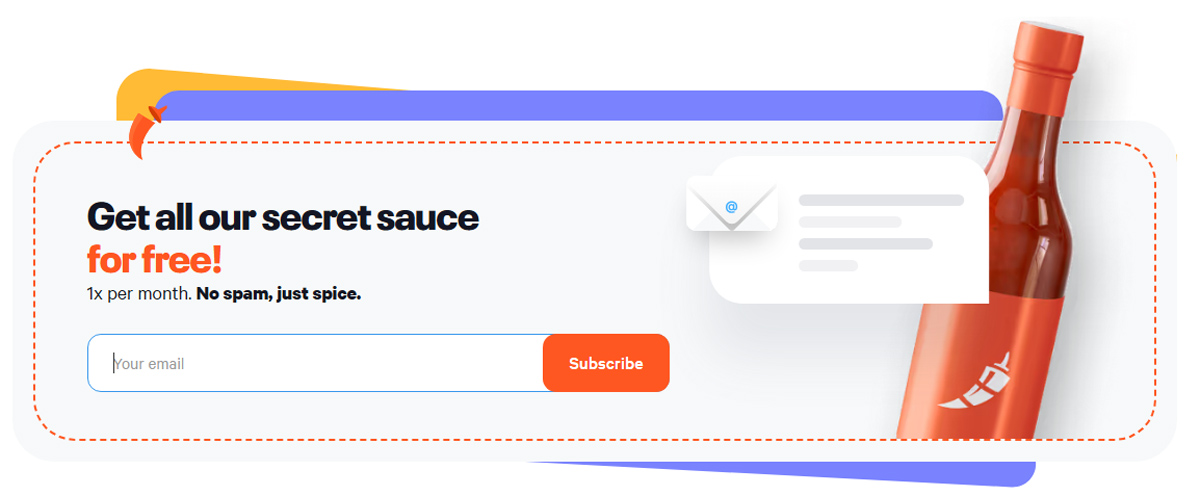
Efficient gated content does more than just generate B2B leads. It gives you context and helps you qualify each lead based on what they engaged with. This way, your sales team can prioritise follow-ups and determine whether a lead is ready to buy or needs more nurturing.
2. Host Webinars
You can connect with B2B buyers early in the funnel by hosting webinars. A webinar gives you the opportunity to share your expertise, answer real questions, and build trust with potential buyers.
During the webinar, focus on educating your audience instead of hard pitching your products or services. Teach them how to solve real problems like improving lead response time, reducing no-shows, or automating scheduling tasks.
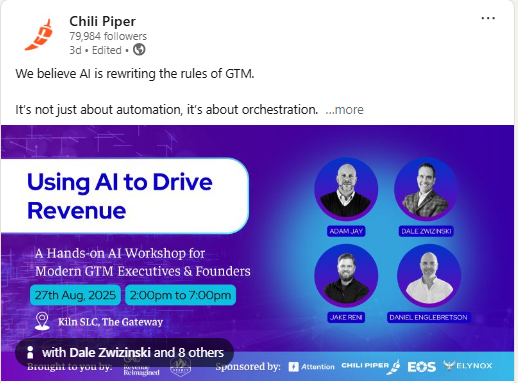
After the webinar, qualify and follow up with your leads by using engagement data. Who stayed for the entire webinar? Who clicked on the CTA? Did anyone ask questions?
The people who take these actions are your most engaged leads. Prioritize them in your follow-up and personalize your outreach based on what they engaged with, the topics they showed interest in, or the pain points they revealed.
3. Make It Easy for Leads to Book a Demo
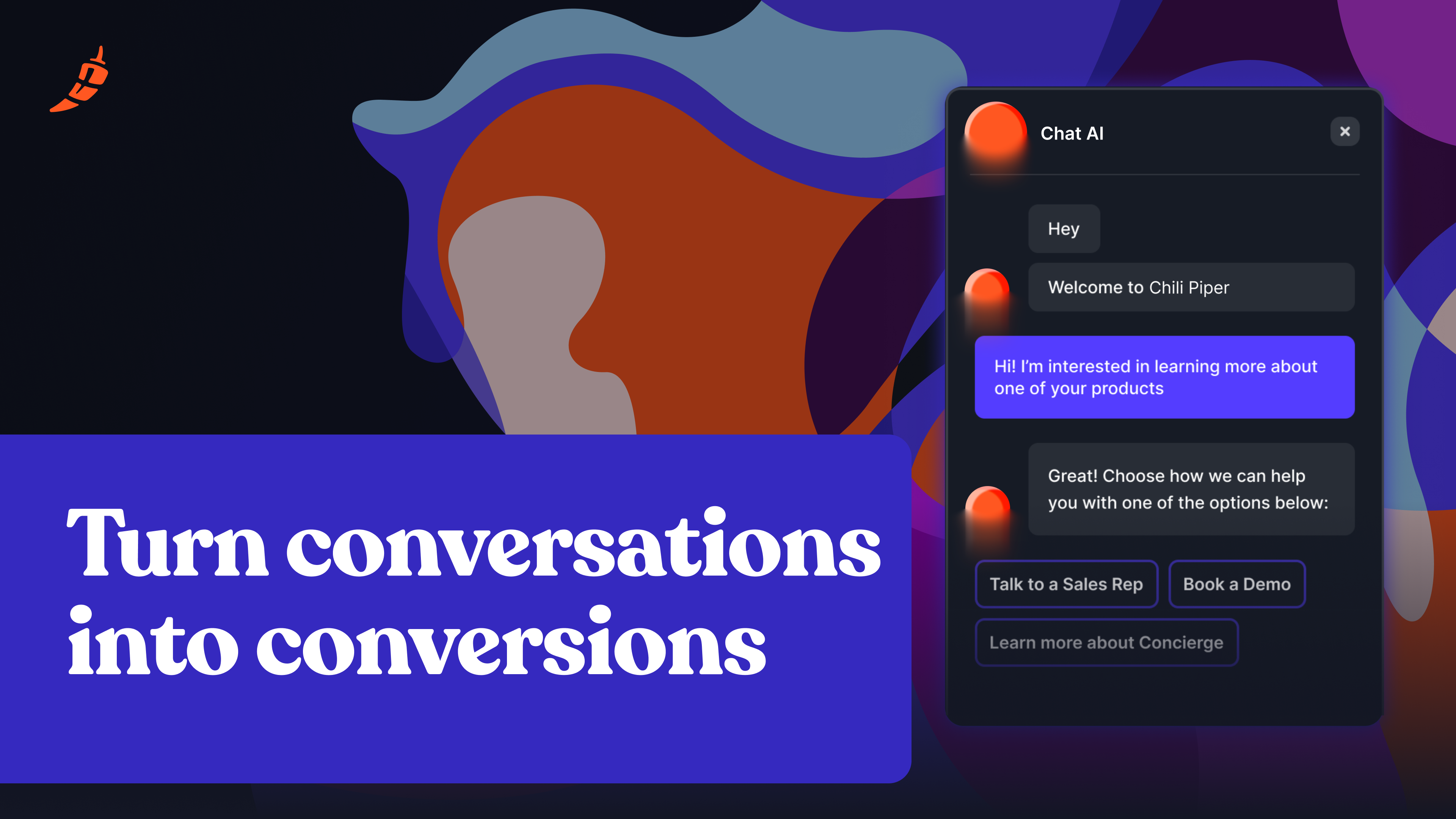
When your leads have more questions about your service or product, they shouldn’t have to wait. Add live chat or automated booking to your company website so high-intent visitors can contact your sales team without any friction.
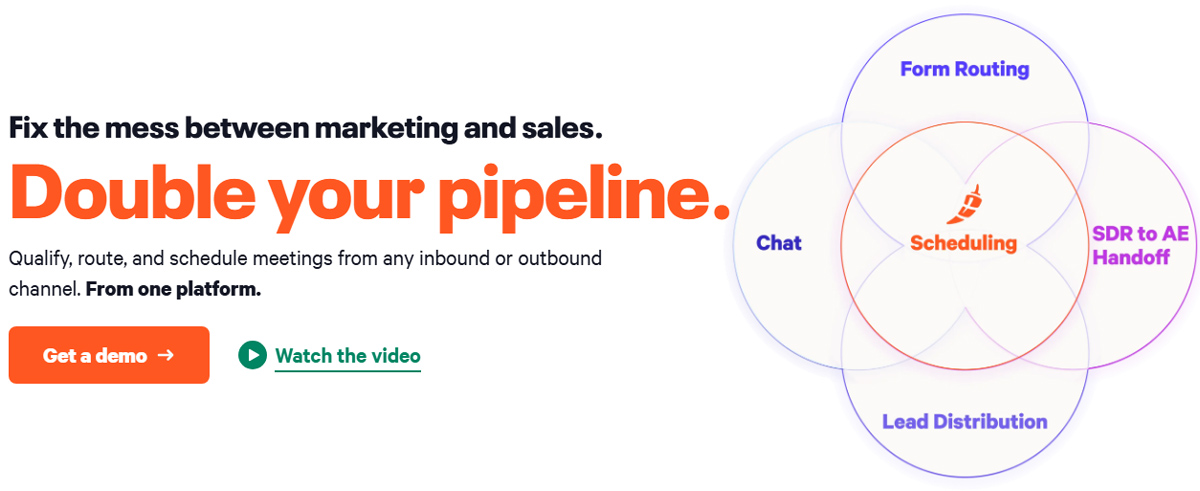
Instead of sending them to a generic contact page, help them schedule a call with the right rep. Tools like Chili Piper’s Concierge help you qualify, route, and schedule a meeting the moment someone shows interest. If they can meet now, great! If not, they choose a time and date that works for them.
4. Retarget Site Visitors
Just because someone didn’t convert on their first visit, it doesn’t mean they’re not interested. You can remind them of your business by retargeting them through paid ads. Whether it’s promoting a free tool, a discount, or a relevant case study, your goal is to keep your brand top of mind until they’re ready to buy.
5. Leverage your competitor’s audience
You can bring high-intent traffic into your sales funnel by going after the audience that’s engaging with your competitors. You should have a list of your direct and indirect competitors. Pair that with keyword research to find keywords that you can target, and then spend your advertising dollars on those clicks.
Alternatively, you can create content that compares your business to a competitor. Careful with how you write the content, though. You need to be honest with the comparison because an audience can smell BS. Be fair to your competitor by showing the similarities and differences.
6. Get Inbound Leads With SEO Content
Organic search is one of the most reliable ways to generate inbound leads for your business. When your content ranks for keywords your potential buyers are searching for, you get in touch with people who are already looking for solutions.
The goal isn’t just to get traffic but to attract people who match your ICP and are close to buying. Once they’re on your business website, guide them to the next step: downloading a resource, booking a demo, or subscribing to your newsletter.
7. Join the Conversation on Social Media
Social media isn’t just for brand awareness or content promotion. You can use it to build relationships and generate new B2B leads.
Start by showing up where your ICP already spends their time. That might be LinkedIn or Twitter for professional conversations, or less conventional platforms like Reddit or Quora, where niche questions are discussed.

Social selling isn’t about pitching your offer in every DM. Instead, share content that solves problems, join relevant conversations, and engage with prospects directly. Keep your business visible, helpful, and trustworthy, and when your B2B prospects are ready to buy, they’ll come to you.
8. Optimize Lead Forms With Smart Routing
To optimize your lead generation strategy, keep your forms short and ask only for essential information.
Focus on essential tools like name, email, company, and role, and use smart routing tools to instantly qualify the lead. Then, assign it to the right lead and ask them to book a meeting. Adding an instant routing tool eliminates delays, reduces manual handoffs, and helps you connect with the lead while their interest is still high.
9. Collaborate With Like-Minded Companies
Lead generation gets easier when you team up with a company whose goals and values align with yours. Working with a like-minded company lets you combine resources, share expertise, and create content that benefits both of your audiences.
This could be a joint webinar, a co-authored ebook, or a bundled offer. By collaborating, you can target a bigger audience, strengthen your credibility, and generate more qualified leads for both companies.
10. Use Customer Reviews
92% of buyers rely on social proof before buying anything. Before your leads book a demo, they want to know other people’s opinions about your product. Especially from people in similar roles or industry.
You can establish credibility early in your buyers’ journey with positive reviews on G2, TrustRadius, and Capterra. These reviews show real people getting real results.
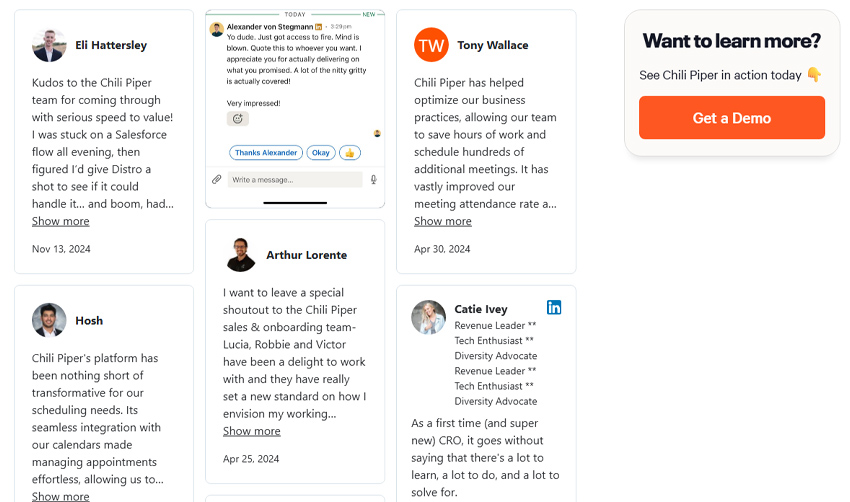
Additionally, highlight positive reviews on product pages, include them in your email campaigns, or add them to sales decks. The more authentic the proof you provide, the easier it is for your leads to trust your product or service.
5 Lead Generation Strategy Mistakes to Avoid
Even with the best lead generation strategies in place, common mistakes can slow down your results. Here are 5 mistakes you should avoid to keep your pipeline full of qualified leads:
1. Not Focusing on Speed
Once a lead shows interest, the clock starts ticking. Connecting with them in the 60 seconds increases the chances of converting them by 391%. If you’re waiting for hours or even days before following up, chances are they’ve already booked a demo with your competitor.
Instead of leaving your prospects in a queue, connect them with the right rep with automated lead routing and scheduling. The fast, smooth experience keeps momentum high and improves your chances of closing the deal.
2. Overcomplicated Lead Forms
When it comes to lead generation strategies, many companies lose leads by asking for too much too soon. If your forms are too long or have confusing steps, they discourage new leads from completing the process. Keep your forms simple, focus on the essential, and use smart tools to qualify and route leads in real time.
Chili Piper’s Concierge helps you minimize effort while still capturing all required data. It enriches known fields based on the prospect’s email address so they only focus on the questions that matter. This leads to shorter, cleaner forms and a better conversion rate.
3. Not Tracking the Results
Without tracking the performance of your lead generation strategies, you’re basically guessing. Without relevant data, you don’t know which channels are driving high-quality leads and which ones are wasting your time and money.
By tracking your results, you can invest more in your best-performing lead strategies, cut the ones that underperform, and avoid relying on guesswork or feelings.
4. Marketing and Sales Misalignment
One of the most common mistakes in B2B lead generation is when marketing and sales teams work in silos. If they don’t share clear criteria on what qualifies a lead, marketing passes prospects that aren’t qualified, and sales wastes time chasing bad fits.
5. Ignoring Lead Nurturing
Not every lead is ready to buy the moment they land on your website. Most of the time, they need consistent engagement before they want to talk to sales. By ignoring your leads, you let them turn to competitors who stay top of mind.
Create Your Own B2B Lead Gen Strategy
Your B2B lead generation shouldn’t rely on a single tactic. Instead, combine multiple strategies, track what works, and constantly improve based on your buyer behavior. From gated content and SEO to smart routing and social proof, each strategy helps you turn prospects into clients.
Focus on speed, clarity, and data-driven decisions to create a lead generation strategy that consistently fills your pipeline with qualified opportunities.
Amy Smith has more than 20 years of experience as a writer for TV news, newspapers, and technology companies. She's tested and reviewed a variety of software, robot vacuums, video cameras, and SaaS. Her content has been featured in Tom's Guide, Business.com, L.A. Times, Reader's Digest, and more. When she isn't testing, researching, or writing, she's usually exploring a small town somewhere, cooking and baking, or playing video games.

Razvan Mihaila is the content writer at Chili Piper. He’s passionate about blending data with storytelling that feels human. When he's not working, you'll find him hiking or cycling up mountain climbs. Follow him on LinkedIn for SEO tips, content strategy insights, and the occasional mountain view.


marketers!
No spam, just spice


