

How modern revenue teams plan, spend, and grow in the age of AI orchestration.
1. Context: Why 2026 is different
In 2025, we had only 2 marketers on our team, responsible for generating over $30M in pipeline. A big chunk of that pipeline came from orchestrated agentic workflows and tight sales and marketing alignment.
So, how I think about 2026 budgets is probably a bit different from most. Before I explain the principles behind it, I want to give some context.
Back in November 2023
One night I was staring at a spreadsheet with bloodshot eyes like most of us might do when we try to reconcile our numbers. I was acting CMO at that time, trying to figure out how to hit our pipeline numbers. Every tab in Salesforce and HubSpot told a different story. Sales leads, marketing campaigns, product usage - all in their own separate data silo.
We’d hit targets last quarter, but just barely. Deals were stalling. And beneath the polite check-ins on alignment calls, the quiet blame game had started. Even if words where not said. Even though I am the founder and I had a different lens to it. That night, it hit me: we weren’t really all rowing in the same direction.
Sales paddled one way, my marketing another, and I was stuck in the middle through my founder lens, stitching it all together with VLOOKUPs and lots of wishful thinking (or delussion as sometimes founders do) . A week later, we finally decided to fix it.
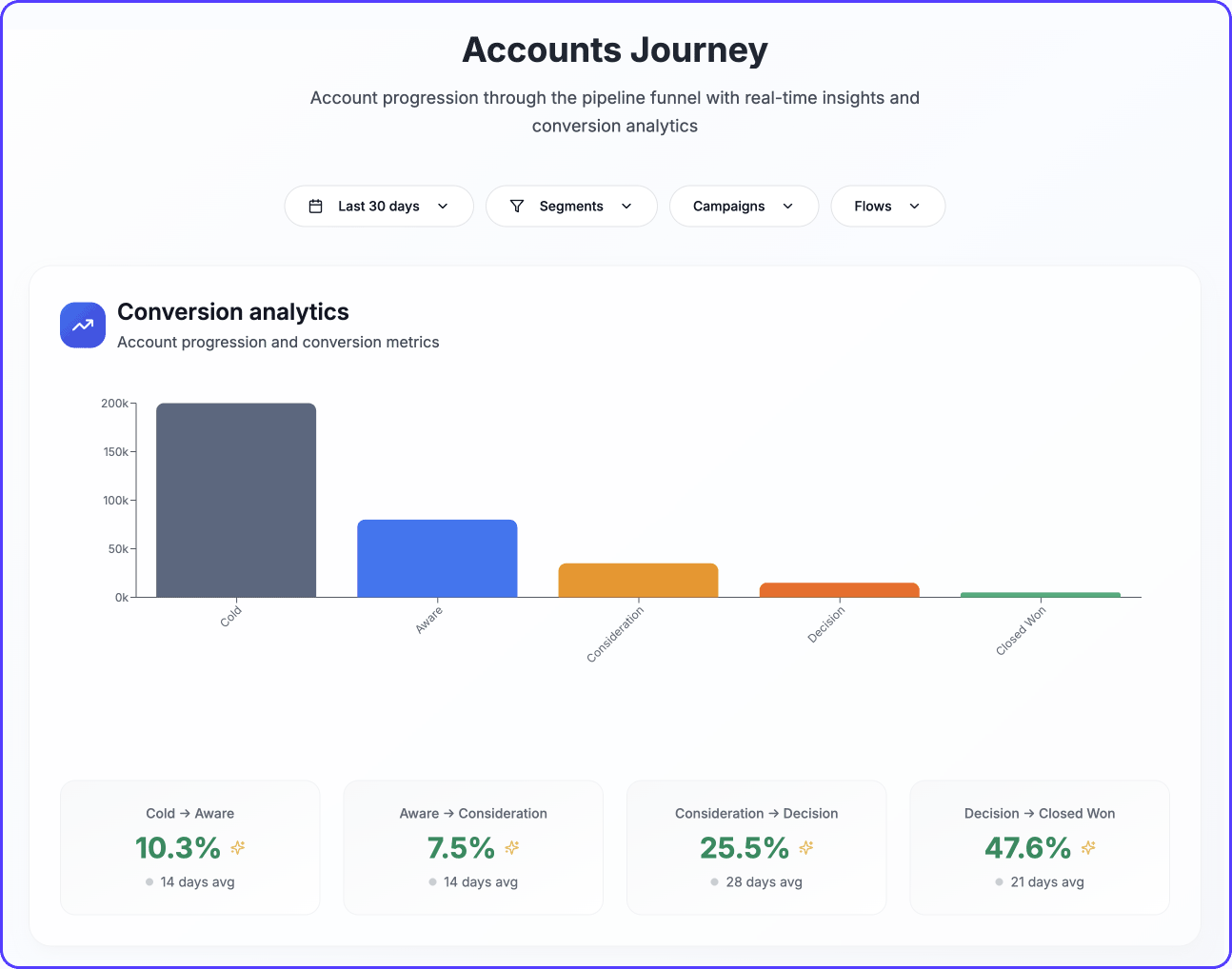
We pulled everything: CRM data, marketing metrics, website activity, product usage - into one Snowflake warehouse. For the first time, we saw the full account journey on a single screen. That was the turning point. From that day on, I never looked at growth the same way again.
Because it was showing us with data what I already knew. When we worked separately on "accounts" it took us a lot longer to close them

2. The fundamentals
Here’s what we learned: there’s no such thing as inbound or outbound - there’s only allbound!
When Sales and Marketing share data, context, and goals, results compound. Our highest-LTV customers and fastest-closing deals had one thing in common:
- Marketing and Sales worked together early in the journey
- Multiple buyers from the same account were activated
It sounds simple, but it changes everything. When everyone works from the same data source and ICP, every channel reinforces the others.
The formula is straightforward:
Data centralization + account tiering + team alignment = focused firepower.
Or, put another way: stop doing more; start aiming better.
3. How we think about 2026 budgets
Our marketing budget for 2026 sits comfortably in the 6-10% of revenue range - around what most benchmarks suggest for healthy growth. But how we allocate that budget looks very different from traditional marketing orgs.
We’ve learned to prioritize clarity, orchestration, and impact:
- 30% demand generation - inbound, outbound, and everything in between
- 20% events & field marketing - we love throwing events and connecting communities
- 50% everything else - content, community, courses, PR, product marketing, and ops
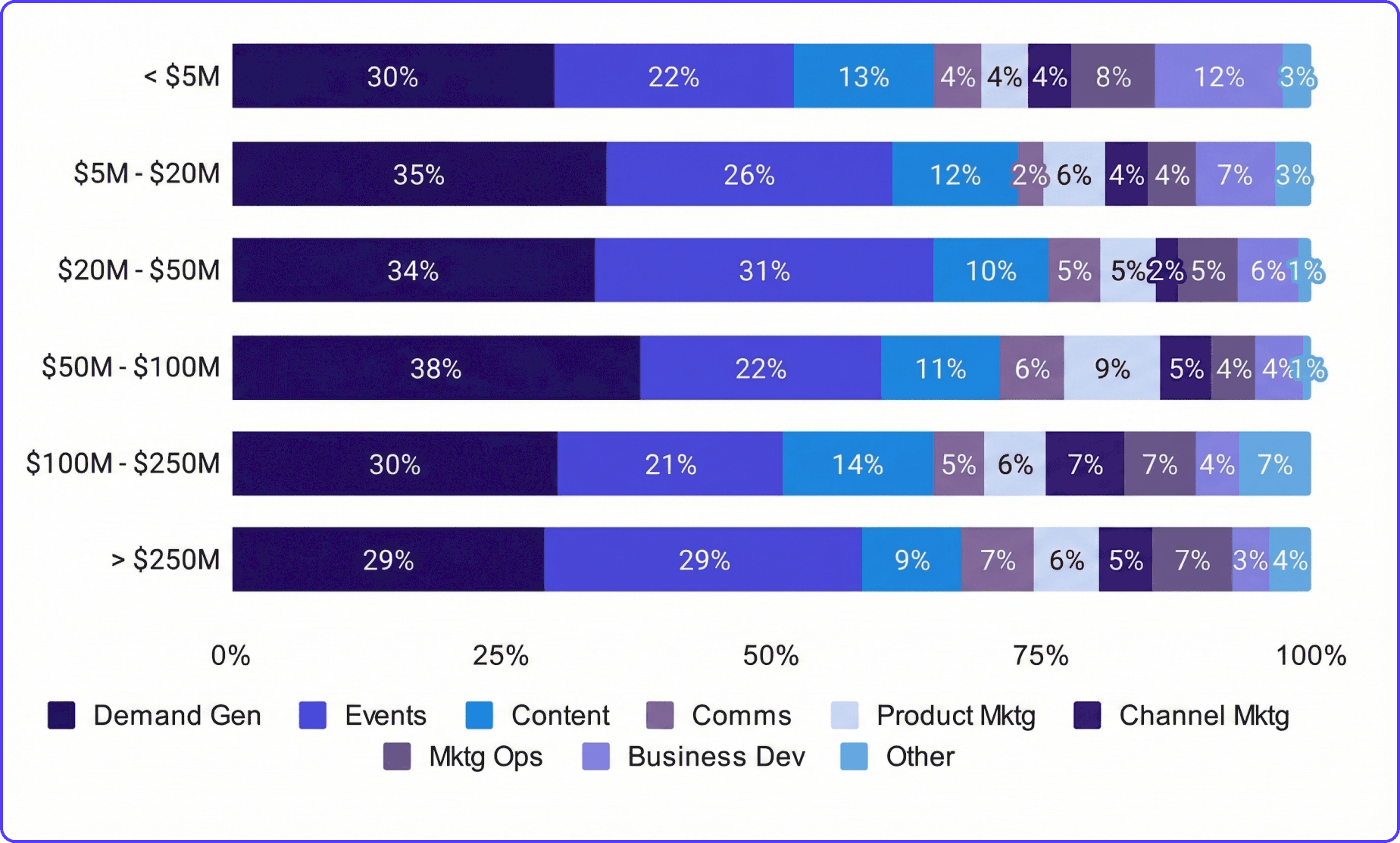
This breakdown gives us room to double down on what drives measurable pipeline without losing flexibility for experimentation.
4. People vs programs vs tools
Here’s where it gets interesting. Because we rely so heavily on AI-driven workflows and automation, our budget mix looks nothing like most B2B orgs. According to most benchmarks, around 40% of the marketing budget typically goes to salaried employees - but that’s not the breakdown we plan to follow.
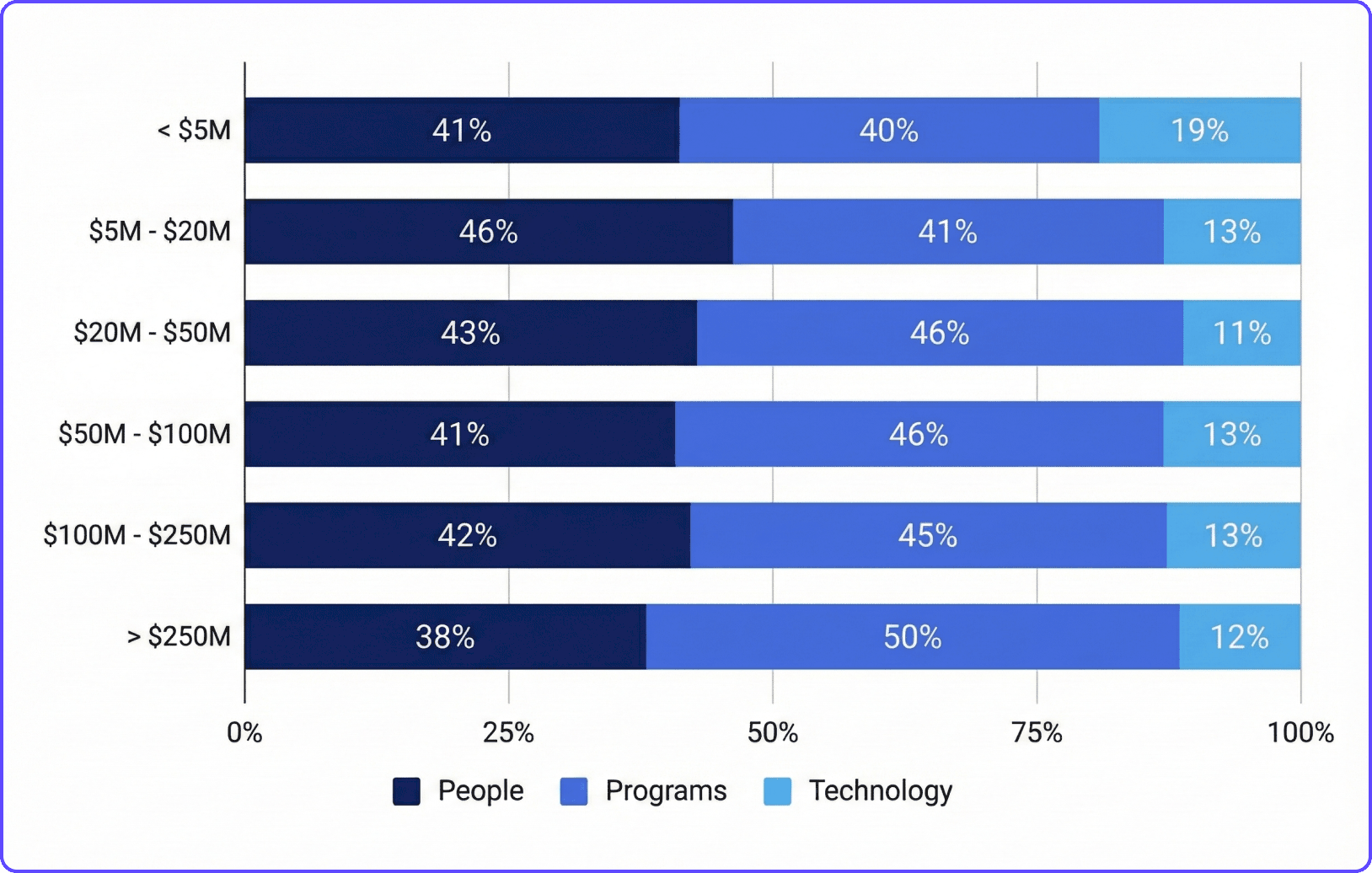
We’re using fractional and freelance talent to extend our capacity, and our AI agents now cover a huge part of operational execution.
Our breakdown looks like this:
- 15% people - small, high-impact team
- 60% programs - demand gen, community, influencer campaigns, and content
- 25% tools - mostly AI and orchestration systems like Chili Piper
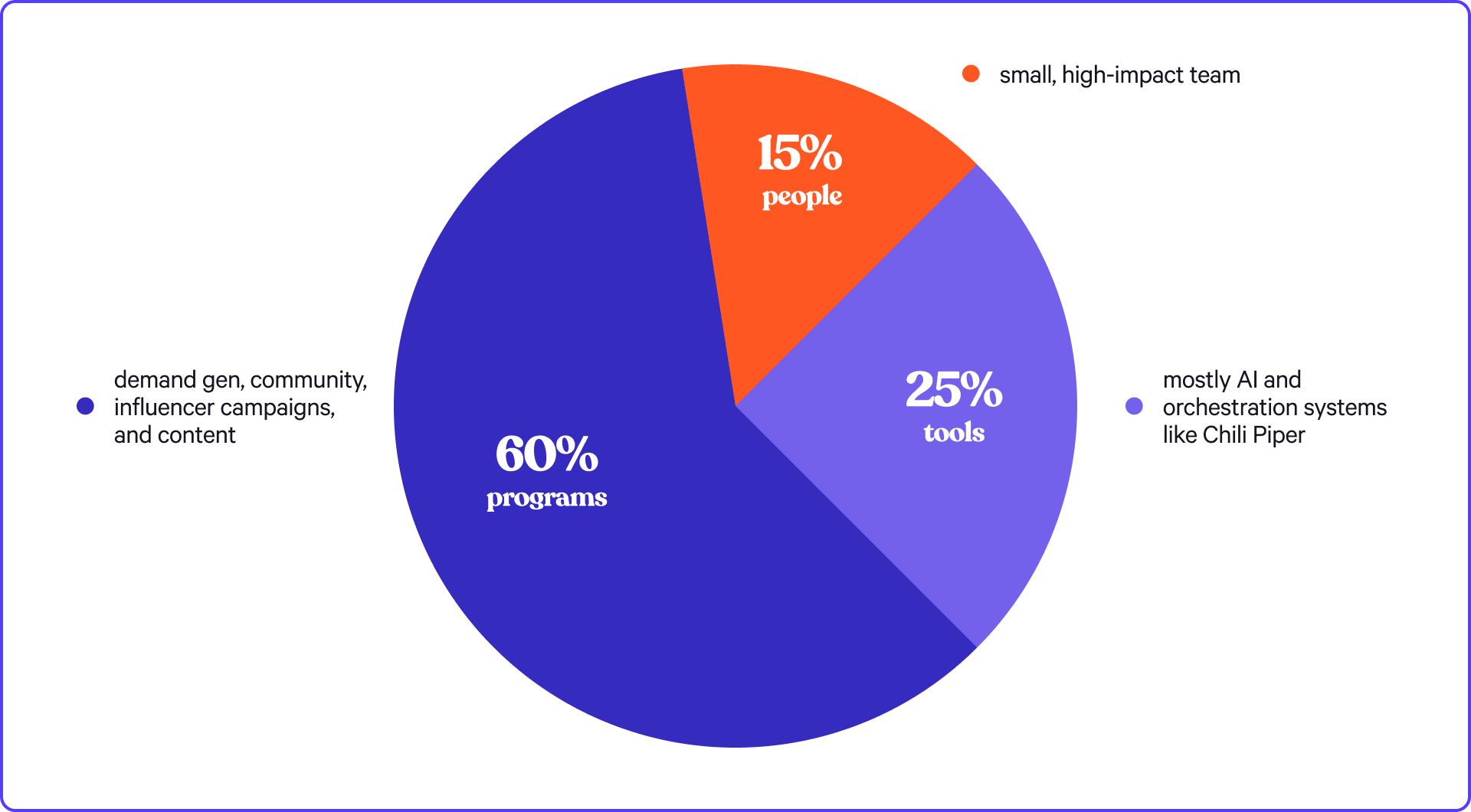
This gives us the flexibility to move fast and scale what works - without bloated headcount or overlapping software.
5. Simplifying the stack
Once all our data lived in one place, the waste was obvious. We had multiple enrichment tools, duplicate lead routing systems, redundant analytics dashboards, and 37 different lead source codes. We ran a redundancy audit and cut roughly half of our tools.
Instead of paying for five platforms to do the same job, we automated directly from our data warehouse using Chili Agents, n8n, and Clay.
Now, some our workflows look like this:
- Spam Checker Agent removes bad leads before routing
- Meeting Prep Agent summarizes accounts instantly before a call
- No-Show Agent automatically follows up when meetings are missed
- Inbound SDR agent automatically qualifies and routes
Tool costs went down by half for us, pipeline went up, and our New Business ACV doubled
Simpler systems. Stronger outcomes.
6. Tools, agents, and data - one system!
In 2026, high-performing GTM orgs won’t see tools, agents, and data as separate categories - they’re one connected system.
At Chili Piper, here’s how we run it:
- Data → Snowflake + Salesforce = single source of truth
- AI Agents → automate execution with Chili Agents, Clay, and n8n
- Orchestration Layer → Chili Piper connects the dots: routing, scheduling, chat, and lead follow-up
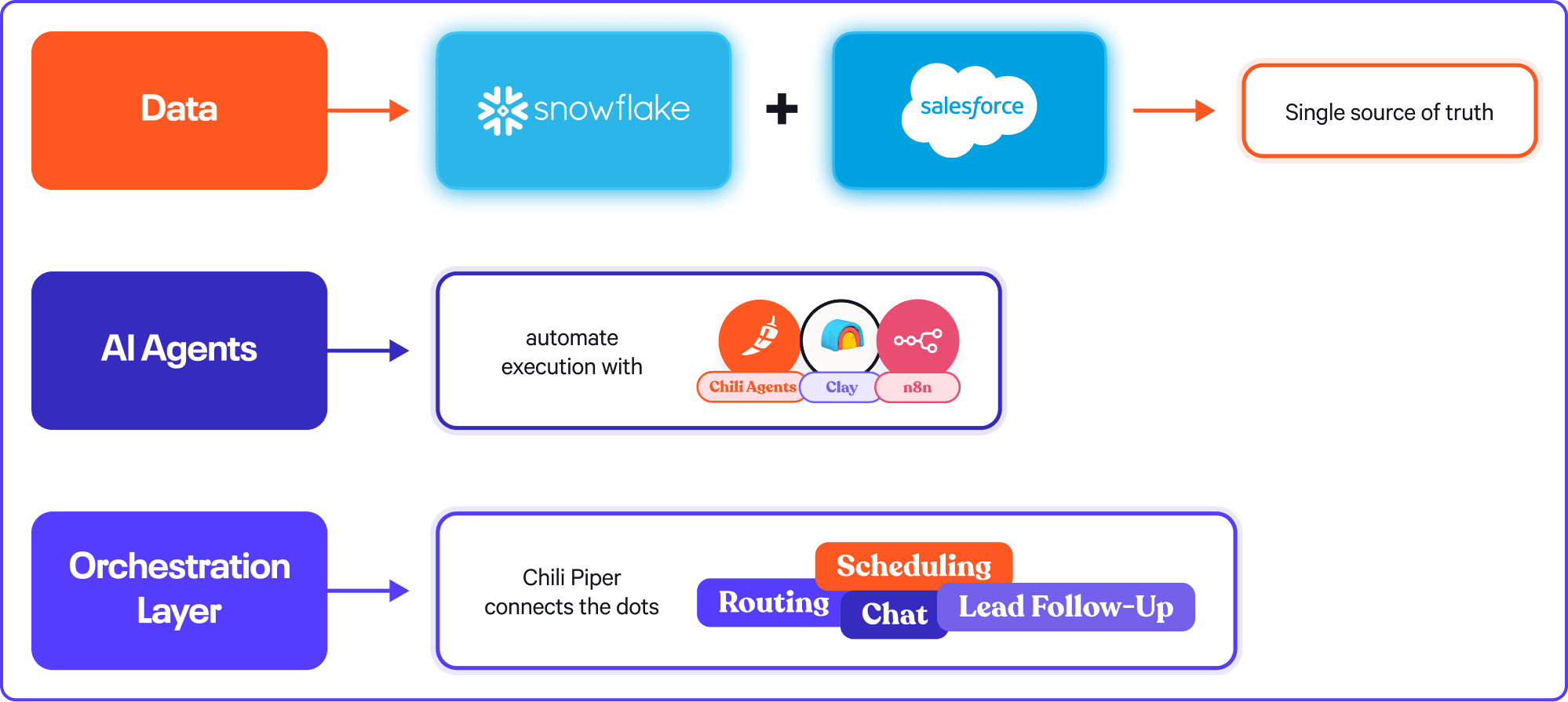
When all three layers talk to each other, marketing, sales, and CS stop operating in silos, and your GTM engine finally runs like one team.
7. The rise of GTM operators
We used to hire SDRs. Now, we hire GTM Operators: people who think like engineers but act like marketers. Their job is to build automated workflows that handle enrichment, outreach, and meeting booking using AI. One GTM Operator using Chili Piper, enrichment APIs, and automation tools can now drive the same pipeline that used to take ten inbound reps.
For CFOs, that’s efficiency, for CMOs, it’s speed and predictability.
Our outbound SDRs now sit under Sales, and our inbound SDRs are all AI-powered - built using our own platform.
8. Personalization at scale
2026 is the year 1:1 personalization finally becomes possible and affordable. Using GenAI, we can now adapt messaging and campaigns dynamically for every account and buyer persona.
At Chili Piper, we use intent signals and AI workflows to personalize follow-ups.
When a target account visits our pricing page, the workflow triggers a personalized ad sequence, routes the right AE, and sends a tailored message instantly.
The result is higher engagement, faster deal cycles, and cleaner handoffs, all without adding manual steps.
9. Measuring what (really) matters
To know what works, we measure velocity and impact, not vanity metrics.
We track:
- How fast high-tier leads turn into qualified meetings
- Routing speed and accuracy (leads to the right AE, instantly)
- CAC, LTV:CAC, payback periods, and pipeline generated per campaign
Every improvement compounds when you see the full funnel, from signal to closed-won, in one place.
10. The takeaway
2026 isn’t about buying more "ai" tools - it’s about connecting the ones that matter.
The teams that will win next year won’t be the ones with the biggest budgets or the longest tool lists. They’ll be the ones that operate from a single source of truth, use AI agents to scale intelligently, and invest in orchestration over fragmentation.
2026 is the year to cut the fat, simplify your stack, and replace complexity with connection.
That’s exactly how we’ve built Chili Piper: first to solve our own chaos, and now to help every GTM team do the same.
P.S. Benchmarks charts are included from here where more data is available.
See the power of Chili Piper in action today!



marketers!
No spam, just spice

